Music Beat Night Show
HOLA GAMEMusic
4.6183.00 Reviews
- Version
- 1.3.6
- Installs
- 5.00M
- Age Rating
- Everyone
Screenshots
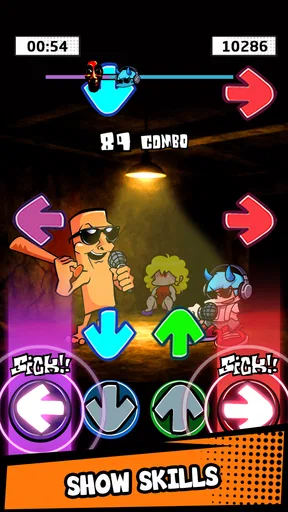
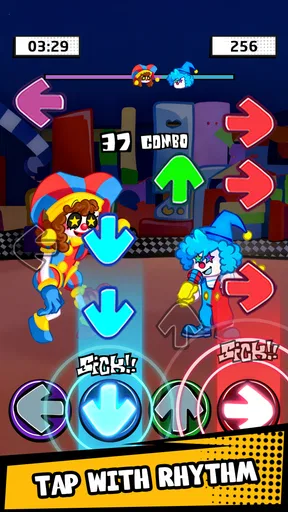
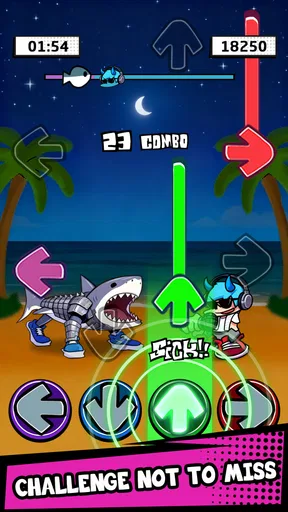
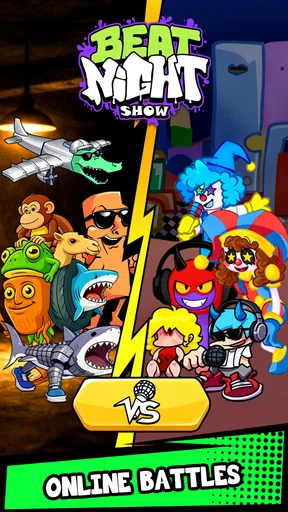
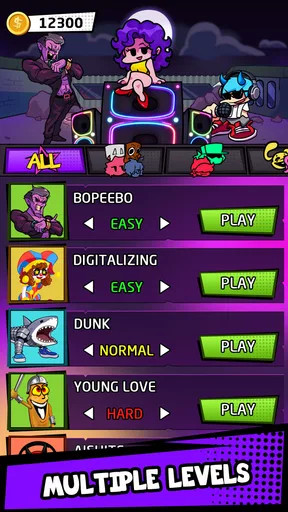
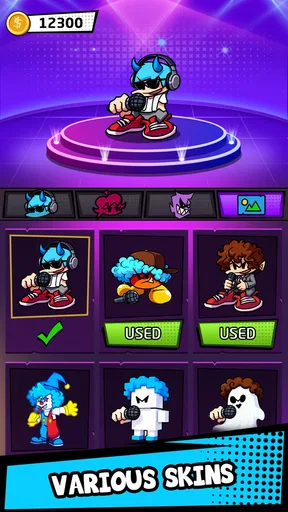

Our Review of Music Beat Night Show
 Analysis by Appyee
I picked up Music Beat Night Show expecting a quick rhythm game and found something that works best in short, focused sessions. It is a free music game from HOLA GAME, built around fighting through beat-driven encounters rather than simply listening to tracks. The basic appeal is easy to understand: follow the rhythm, react at the right moment, and keep the performance moving while enemies appear on screen. It has the bright, immediate style that makes sense on a phone, but it also demands more attention than the cheerful presentation first suggests.
That balance is important in a shared household. One person can use it for a few minutes while waiting, another can pick it up later for a longer attempt, and the game does not require the whole room to understand a complicated control system before playing. At the same time, it is not a passive background game. If someone is using the device for music, a call, or another activity, a rhythm battle can be interrupted at exactly the wrong moment. My overall impression is that this is a friendly choice for casual music-game fans who enjoy quick reactions, while people looking for a deep rhythm library or a quiet, low-pressure experience may prefer a different kind of app.
How the beat battles feel in everyday use
The central idea is to turn a rap-style music performance into a battle. Instead of treating the soundtrack as decoration, the game asks me to connect what I hear with what I see and then respond quickly. That gives each round a useful sense of purpose: I am not merely tapping along for points, but trying to maintain control while the opposing side adds pressure. The “night show” presentation gives the game a stage-like personality, which helps it stand apart from more clinical rhythm trainers.
In practice, I found the first few sessions easiest to enjoy when I treated them as warm-ups. I would play one round to settle into the timing, then decide whether I wanted to continue. This approach is particularly useful on a shared phone or tablet because it creates a natural handoff point. Someone else can take the device after a completed attempt instead of waiting through a long campaign segment. That makes the game more suitable for a household than a title that depends on one person keeping the device for an extended uninterrupted session.
A realistic example is a family waiting for a meal or sitting together during a short break. One player can try a battle, pass the device to another person, and compare how each person handles the same kind of musical pressure. The game becomes a small group activity without requiring everyone to play simultaneously. I would still keep the volume at a considerate level, especially when several people are sharing a room, because the rhythm is much easier to follow when the audio is clear.
The game’s category is music, but it is not the best match for someone who wants an interactive jukebox or a large catalog of recognizable songs. Its focus is the battle performance and the timing challenge. I would describe it as a music-driven action game first and a traditional rhythm library second. That distinction matters before installing it: if your ideal experience is choosing from many songs and practicing them repeatedly, a dedicated rhythm game may offer a better fit. If you like the idea of music giving structure to enemy encounters, this title has a more direct appeal.
Starting on a shared device without confusion
Before handing the game to another person, I recommend agreeing on a simple routine. Decide who is playing first, whether sound will be on, and whether the device should remain in portrait or landscape orientation if the game changes its layout during use. These are ordinary household details, but rhythm games expose them quickly. A player who is ready to react can lose concentration if someone suddenly adjusts the volume, rotates the screen, or takes the device mid-performance.
I also prefer testing the controls alone before introducing the game to younger players. That lets me understand the pace and identify whether the device responds consistently to taps and swipes. A short private trial is more useful than explaining every possibility in advance. Once I know how the game expects me to react, I can show another player the basic timing without turning the first shared session into a technical lesson.
Because the game is free to download, it is easy to try without making the household commit financially at the start. However, the presence of optional purchases changes how I would set up a shared device. I would make sure the person using it understands that an on-screen purchase is not part of normal play and should be discussed first. The listed purchase range is from ninety-nine cents to two dollars and ninety-nine cents per item, so the amounts are small individually, but repeated casual buying can still become an unwanted surprise.
This is one of the less obvious trade-offs of a free game in a family setting. The download price removes the first barrier, but shared access means the device owner should establish a clear boundary around purchases. I would not hand the phone to a child and assume that “free” means there is no financial decision involved. A quick household rule—play freely, ask before buying—solves most of the confusion without making the game feel restricted.
Passing the phone between players
Music Beat Night Show works naturally as a turn-based household activity, even though its action takes place one player at a time. I found that short attempts are easier to compare than vague statements about who is better. A player can focus on maintaining the rhythm, while the next person watches and learns where the pressure increases. This is especially helpful for beginners who need to see the timing before they feel comfortable taking control.
There is also a useful coordination lesson in not interrupting a round. In a shared setting, I would avoid calling to the player during a difficult sequence or asking for the device before the performance ends. That is not a feature of the app; it is simply the best way to respect what the game is asking from the player. Rhythm challenges depend on concentration, and even a friendly interruption can make the result feel unfair.
For a household with several players, I would use a simple rotation: one attempt each, then a second turn only after everyone has had a chance. This keeps the strongest player from dominating the session and gives less experienced players a reason to continue. It also prevents the game from becoming a competition based only on who gets the longest uninterrupted access to the device. The approach works particularly well when the goal is shared entertainment rather than proving who has the fastest reactions.
Another practical tip is to use headphones for individual play when appropriate, but not to treat them as a requirement for everyone. Headphones can help a player hear the beat more clearly, yet they also reduce awareness of what is happening around them. In a shared room, I would rather use a moderate speaker volume and make sure everyone knows whose turn it is. In a quiet personal session, headphones may make it easier to concentrate. The better choice depends on the setting, not on a universal advantage.
What younger players and adults should expect
The game is rated Everyone, which makes its general presentation approachable for a broad audience. I would still judge suitability by the child, not only by the label. A young player who enjoys music and quick visual reactions may understand the appeal immediately, while someone who becomes frustrated by missed timing may need encouragement and shorter sessions. The battle framing is energetic, but the important challenge is coordination rather than frightening realism.
For adults, the game can be a pleasant way to fill a few spare minutes, though its simplicity may limit its long-term appeal for experienced rhythm players. I enjoyed the immediacy, but I would not choose it as a replacement for a more demanding music game with extensive practice options, deeper progression, or a broader song-focused structure. Its strength is that I can understand the premise quickly and begin playing without preparing for a large system.
Trust is also part of shared-device use. If the phone belongs to a parent, partner, or roommate, the player should know which actions are acceptable before starting. That includes purchases, changing the volume, and leaving the game open when the next person needs the device. The app itself does not need to become a source of household arguments; a little coordination keeps the experience light. I especially appreciate this approach when several people use one device for both entertainment and practical tasks.
I would skip this game for someone who dislikes timing pressure, wants to play entirely offline without thinking about interruptions, or expects a calm music-listening experience. I would also hesitate to recommend it to a player who needs extensive customization or a very large selection of familiar tracks. Those are not flaws in the narrow sense; they are signs that the game is aimed at a particular kind of player. Its identity comes from the compact battle loop, so people seeking a full music platform should look elsewhere.
Performance, version, and device expectations
The current version is 1.3.4, and the game supports devices running Android 7.0 or later. That makes it accessible to many Android users, including people who keep an older phone for shared household use. I would still test it on the actual device rather than assuming that operating-system support guarantees an equally comfortable experience everywhere. Rhythm play benefits from a responsive screen, stable audio, and enough battery for a session, so an older device may feel less suitable even when it meets the minimum software requirement.
Screen size affects the shared experience too. A compact phone is convenient for one person, but a larger tablet is easier for two people to watch during a turn. On a small display, spectators may miss the visual cues that help explain the timing. That does not stop the game from working, but it changes how social the session feels. If the household shares a tablet, I would use that for group play and reserve the phone for individual attempts.
I would also avoid starting a serious attempt when the device is about to be used for something important. A rhythm battle is not a good activity to begin seconds before an expected call or while someone is waiting for a navigation instruction. The game is better when the player has a clear window, even if that window is brief. This is one reason I see it as a strong “small break” game rather than a title that should take over a shared device for an entire evening.
How it compares with familiar music-game alternatives
Compared with a traditional rhythm game, Music Beat Night Show puts more emphasis on the confrontation around the music. A conventional rhythm title may feel like a song library with scoring layered on top, while this one uses the beat to drive a battle scene. Compared with an action game that merely includes a soundtrack, it gives timing a more central role. That middle position is its clearest identity.
If I wanted to practice musical timing in a focused way, I would choose a game designed around repeated song mastery. If I wanted a competitive action experience with deep character systems, I would choose a larger battle game. This title makes more sense when I want a quick mixture of both: enough action to create urgency, but enough rhythm to make each response feel connected to the performance.
The trade-off is depth. A compact design is approachable, but it can feel limited to players who want a long-term hobby with many layers to study. I would recommend trying it during a short break before deciding whether it deserves permanent space on a crowded device. Its strong first impression comes from how quickly the music and combat idea becomes understandable; its long-term value depends on whether that loop continues to feel satisfying for you.
Popularity, cost, and the practical decision
HOLA GAME has built a sizeable audience for this release: it has passed one million installs and holds a 4.5 average from around eight thousand ratings, with 171 written reviews shown alongside them. Those figures suggest that the concept has reached many players, but they should not replace personal testing. Rhythm games are unusually dependent on individual timing preferences, touch response, and tolerance for repetition.
The game is free, which makes a trial straightforward, and the optional items cost between ninety-nine cents and two dollars and ninety-nine cents each. I see that pricing as manageable for an informed adult, but it reinforces my advice for shared devices: keep purchases separate from ordinary play and make the household rule clear before anyone starts. A child can enjoy the main game without being responsible for a purchase decision, and an adult can decide later whether an optional item is worthwhile.
The age rating of Everyone makes the game easier to consider for mixed-age households, but supervision still depends on the situation. Younger players may need help with timing, frustration, and purchase boundaries; older players may simply want to play independently. The important point is that suitability is not only about content. It is also about whether the player can manage a fast, attention-heavy game and use a shared device respectfully.
My household verdict
After spending time with it, I see Music Beat Night Show as a lively, accessible music battle game that is particularly convenient for short turns. I like that its premise can be explained quickly, that the beat gives the action a clear purpose, and that a free download lowers the risk of trying it. It is easy to imagine passing the phone around after dinner, using a tablet during a family wait, or playing alone for a few focused minutes.
My recommendation comes with boundaries. Keep the volume considerate, do not interrupt a player mid-sequence, and agree on purchases before sharing the device. Those small habits make a noticeable difference because the game relies on concentration more than its colorful presentation might suggest. I would also test it on the device that will actually be used, especially if it is older or shared between many people.
The best reason to choose it is its compact blend of rap-inspired rhythm and enemy battles. The best reason to skip it is that the same focused design may not satisfy someone searching for a huge music catalog, a deep competitive system, or a relaxed listening app. For my household, it earns a recommendation as a free, easy-to-start game for individual turns and friendly comparisons, provided everyone understands where play ends and device responsibility begins.
Privacy and Permissions
See what permissions an app requests and how it handles your data.
- Location
- approximate location (network-based)
- Wi-Fi connection information
- view Wi-Fi connections
- Other
- view network connections, pair with Bluetooth devices, access Bluetooth settings, connect and disconnect from Wi-Fi, full network access, control vibration, prevent device from sleeping
Verdict
Strengths of Music Beat Night Show
- Energetic rhythm-based gameplay suits short, casual play sessions.
- Bright visuals and music create an engaging concert-like atmosphere.
- Simple controls make it accessible for players new to rhythm games.
- Varied tracks can help keep repeated sessions from feeling too predictable.
- Works well as a quick distraction when you have a few minutes to spare.
Limitations of Music Beat Night Show
- Some songs or features may require in-app purchases to unlock.
- Fast note patterns can feel difficult on smaller phone screens.
- Repeated levels may become less engaging for experienced rhythm players.
- Audio quality and enjoyment depend heavily on your device’s speakers or headphones.
- Ads may interrupt play unless an ad-free option is available.
Other Releases by HOLA GAME
View All
Beat Shooter Night: Rap Battle
Music4.2

Full Mod Rap Battle Night
Music4.1

Rap Beat Battle - Full Mods
Music4.2

Blade Night : Rhythm Saber
Music4.8
Similar Picks in This Category
View All
Tiles Hop Music & Ball Game
AMANOTES PTE. LTD.4.3

Magic Tiles 3™ - Piano Game
AMANOTES PTE. LTD.4.6

Real Piano
Bilkon3.7

Piano Game: Classic Music Song
Dream Tiles Piano Game Studio4.0

Smash Colors: Music Ball Rush
BADSNOWBALL HONGKONG LIMITED4.2

Piano Music Go-EDM Piano Games
Joy Journey Music Games4.5
Frequently Asked Questions
What is Music Beat Night Show?
Music Beat Night Show is a music-focused entertainment app designed around a lively night-show atmosphere. It may include musical performances, themed content, artist or event information, and interactive features depending on the version available on your device. Before downloading, check the store description, screenshots, developer details, and supported regions to confirm that its current content matches what you expect.
Is Music Beat Night Show free to download and use?
The application may be available as a free download, but some features, content, events, or premium options could require payment. Users should review the Google Play Store or Apple App Store listing for details about subscriptions, in-app purchases, advertising, and trial periods. Also check whether charges renew automatically and how purchases can be managed through your device account.
Does Music Beat Night Show require an internet connection?
Music Beat Night Show may need an active internet connection to load shows, music, videos, event information, updates, or interactive content. Some basic sections might remain accessible offline, but this should not be assumed unless the developer clearly confirms it. Using mobile data for streaming can consume a significant amount of bandwidth, so Wi-Fi is recommended for extended sessions.
Is Music Beat Night Show safe for children and suitable for all ages?
Suitability depends on the content presented in the app, including music themes, language, visual effects, advertising, links, and any live or community features. Parents should review the official age rating and privacy information before allowing children to use it. If the app includes external links, purchases, or user interaction, parental controls and purchase restrictions are advisable.
What permissions and personal information may Music Beat Night Show request?
The permissions requested can vary by platform and app version, but an entertainment app might ask for network access, notifications, storage, or other device functions. Review the permission list and privacy policy before installation, especially if the app requests access unrelated to music or show content. Avoid providing unnecessary personal information and download only from an official store.
Play our best games!


